
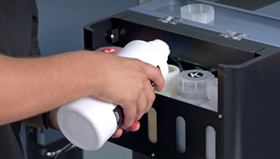
How to store your white DTF or UV ink to prevent settling and printing problems
Proper storage of white ink, which is particularly prone to sedimentation, fundamentally affects the quality of DTF, UV or UV DTF printing and the reliable operation of the printer. Luckily just by following a few simple rules you can avoid all the headaches of uneven coverage, ink supply problems and nozzle clogging. Let's see how!
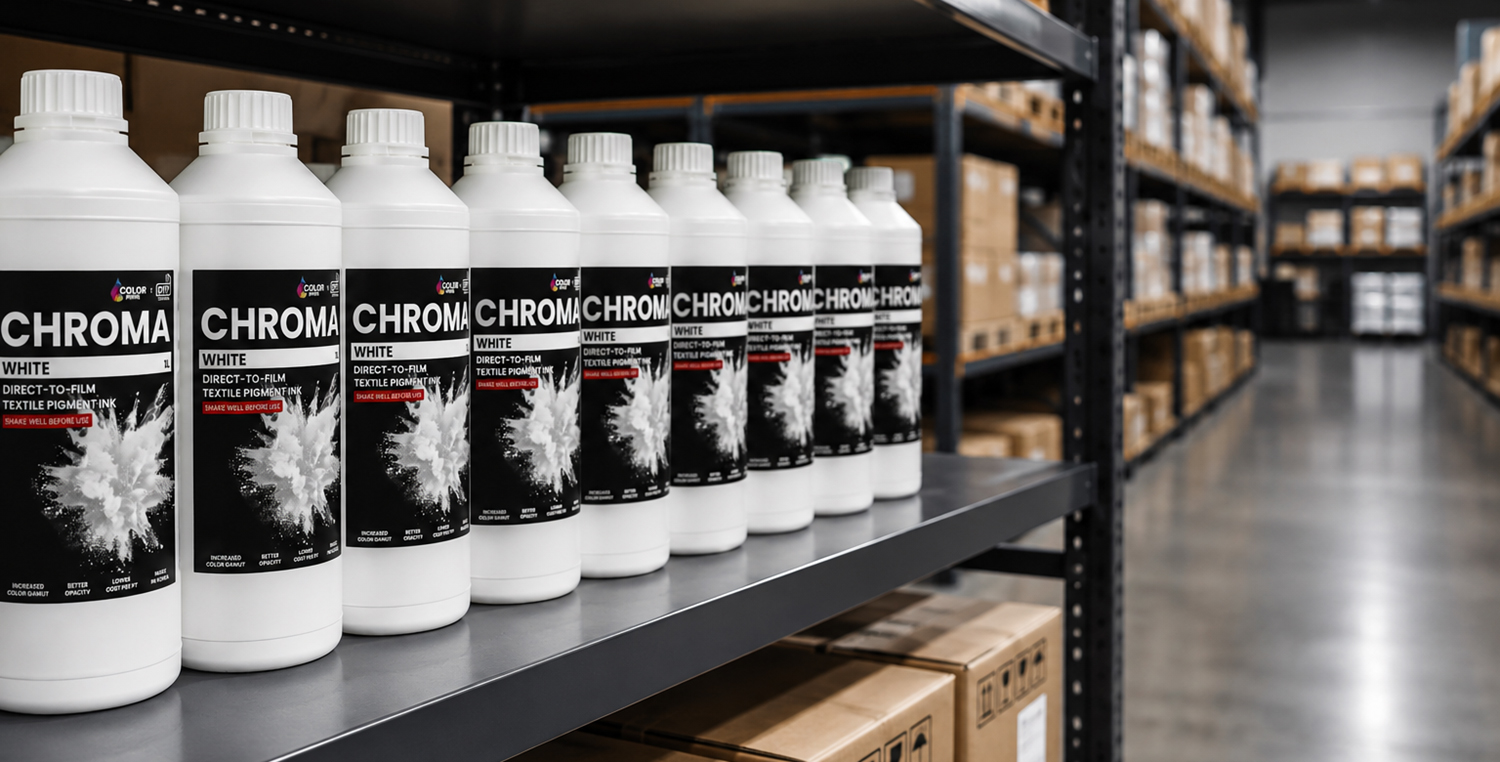
Why does white ink settle?
You've probably heard that white ink requires more attention than CMYK ones. But why is that? The coverage white ink provides is ensured by the large amount of white pigment it contains, but these pigment particles can gradually sink to the bottom of the bottle or ink cartridge as it sits. To avoid the latter, there are built-in white ink circulation system in professional DTF or UV printers such as DTF Station or Mutoh's
industrial quality machines.
However, it is also important to ensure the quality of ink stored on the shelf before using them in the printer. Even quality print supplies can become useless if not stored porperly. During prolonged storage, the sediment that naturally forms in white inks can compact, making it increasingly difficult to turn it back into a homogeneous state. If you fill improperly homogenized white DTF or UV ink into your printer, the result will be poor or uneven white coverage, resulting in color errors, and problems may also occur in the ink system and print head.
Shake it regularily!
Never leave your stored unopened ink bottles untouched on the shelf for months! It is recommended to shake them daily, thereby reducing the chance of the pigment settling permanently in a solid layer at the bottom of the bottle. In addition, it is important to properly homogenize the white ink before use, so that the settled pigment is evenly distributed in the liquid again..
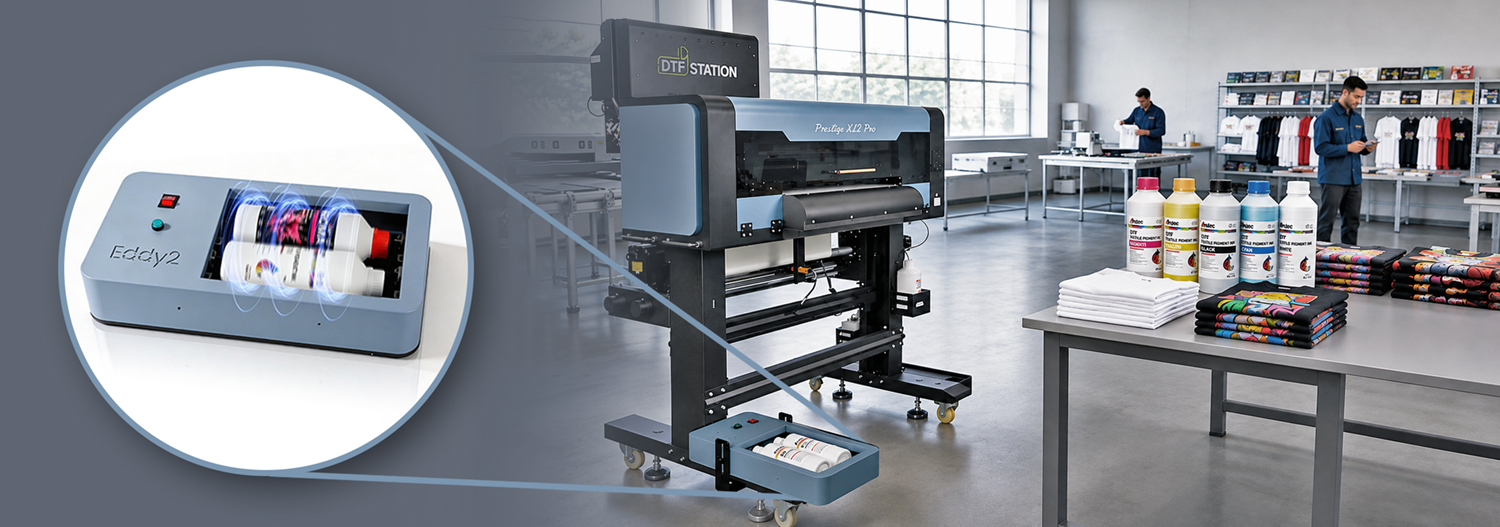
Automate the process!
Sounds tiresome? Fear not, we have a better solution! Eddy2 Ink Bottle Shaker, a smart little device developed by DTF Station, will save you time and effort, while it also eliminates the inconsistency of manual shaking. It's also a space-saving solution: it can be easily mounted on the printer stand, always providing easy and quick access.
It is extremely easy to use: just place the bottles in the machine, turn it on, and then press the Start button to start the 10-minute automatic ink mixing cycle. That's it! The result? Consistent ink viscosity, resulting in less maintenance, longer printer life, and perfect prints!
The storage environment is also important!
Always choose the temperature you store your DTF or UV inks in based on the specifications indicated on the bottle, but in most cases it is true that a stable, average room temperature environment is ideal. It is important to avoid direct sunlight, large temperature fluctuations, excessive heat and especially the risk of frost. Therefore, never store DTF paints next to a radiator or other heat source, in a sunny window, or in a storage room that overheats in summer or cools in winter.
No matter how good the ink you use is, extreme temperatures and improper storage can change the properties of the DTF ink, resulting in poorer print quality and reduced printer life in the long run.
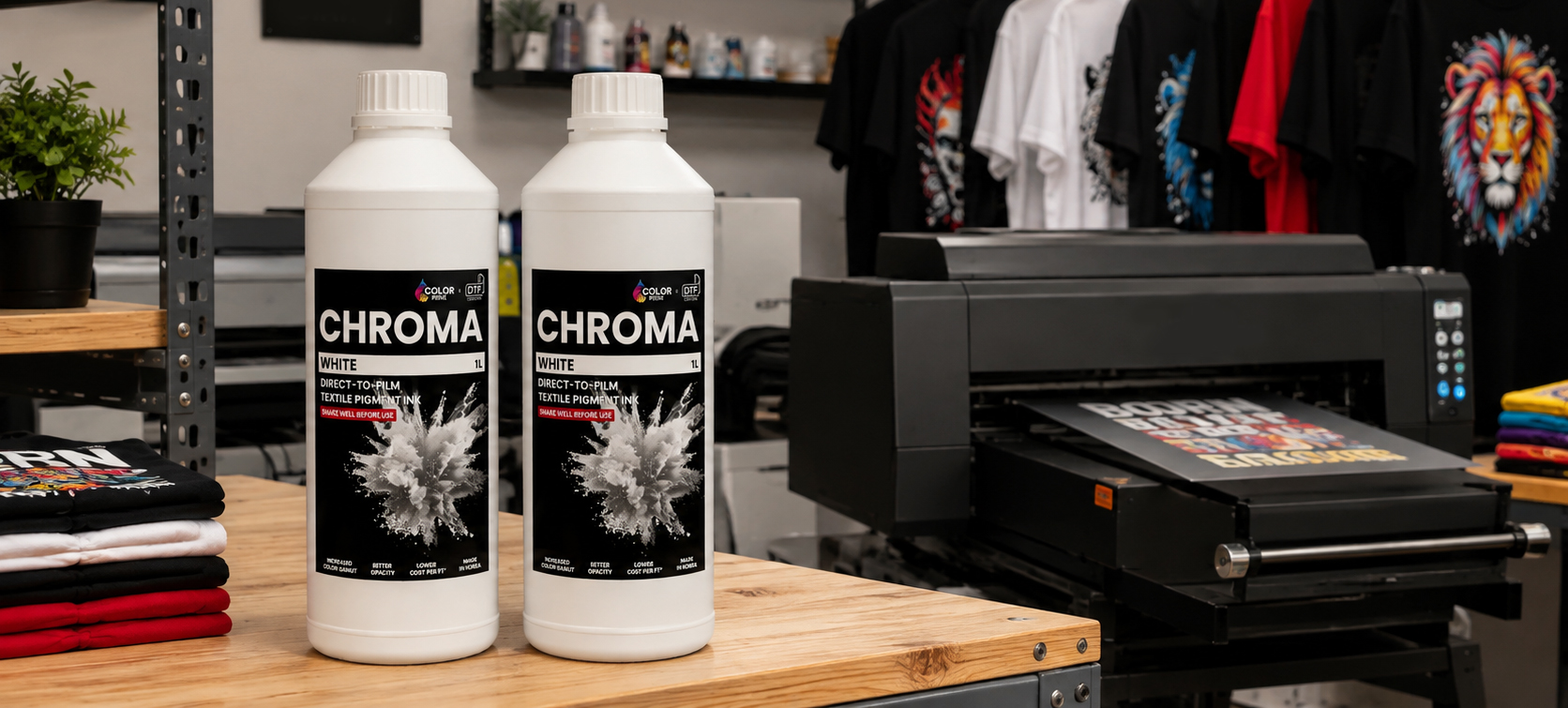
Things to consider with opened ink bottles
- To avoid evaporation and contamination of the ink, always close the bottle tightly after opening!
- Do not pour ink that has already been stored in another container back into the factory bottle. Even a small amount of contamination can cause a big problem if it gets into the ink system of the DTF or UV printer.
- It is also recommended to indicate the date of opening. If you keep several bottles of DTF ink, UV ink or UV-DTF in stock, apply the FIFO (First In, First Out) principle: if possible, always use the oldest ink that is still in good condition first.
Proper ink storage is the foundation for reliable printing
Proper storing and regular homogenization of white DTF ink or UV ink only requires a few minutes of attention, but in return it can prevent a lot of inconvenience. Keep the ink at a suitable, stable temperature, protect it from direct sunlight and frost, shake it regularly during longer storage, and make sure to homogenize it properly before use!
Properly managed white ink contributes to consistent white coverage, stable print quality, and more reliable operation of your printer's ink system.

► Ensure the quality of your white inks with the Eddy2 Ink Bottle Shaker!
► Learn more: Color Prime Chroma inks – The next gamechanger in DTF printing!


